 RESUME
Project: AI-generated cinematic film teaser for artist Peter McGough
Role: AI Creative Content Strategist, AI Image & Video Generation, Prompt Engineering, Character Development, Video Editing
Tools: Higgsfield AI, Sonovid AI, Nano Banana 2, Nano Banana Pro, Sora 2, Kling 2.6, Veo 3, Veo 3.1, Wan 2.5, Hailuo MiniMax, Adobe Photoshop, Adobe Firefly, Adobe After Effects
While working with Frqncy Studio, I was tasked with creating a cinematic teaser for a larger film centered on the paintings of New York artist Peter McGough, whose work is represented in major institutional collections including the Whitney Museum of American Art.
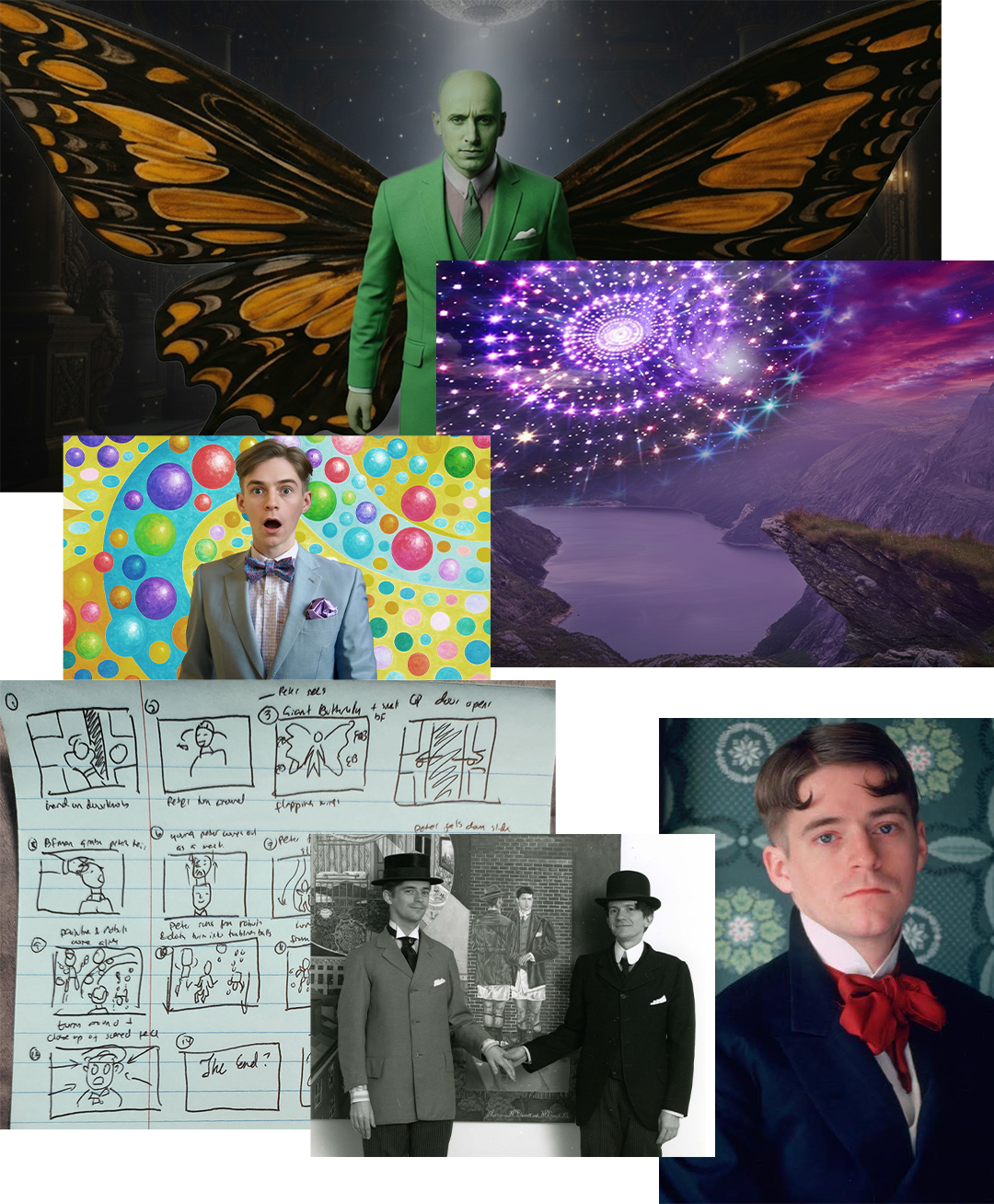
The main challenge was translating Peter’s highly abstract paintings, collages, archival photographs, and personal references into believable moving scenes while keeping the film aligned with his specific artistic direction.
After developing the storyboard with the client and studio team, I built the film through a mix of AI generation and manual image-making.
One of the most complex parts was recreating a younger version of Peter McGough. I used multiple image-generation workflows to refine his:
• Facial likeness and age
• Period-appropriate clothing
• Expressions and poses
• Lighting and perspective
• Character consistency across scenes
Once the character assets were stable, I generated higher-resolution images and adapted them into multiple shots and movements.
For video generation, I tested several models across Higgsfield and Sonovid, including Sora 2, Kling 2.6, Veo 3/3.1, Wan 2.5, and Hailuo MiniMax. Different models were selected based on the type of motion, visual style, character behavior, or abstract animation required for each shot.
The teaser was not built as a fully automated AI output. I combined generated material with Adobe Photoshop, Adobe Firefly, and Adobe After Effects to correct assets, composite elements, control transitions, add effects, synchronize music, and shape the final pacing.
That hybrid workflow gave us more control over continuity and allowed the teaser to retain a deliberate human-made feel.
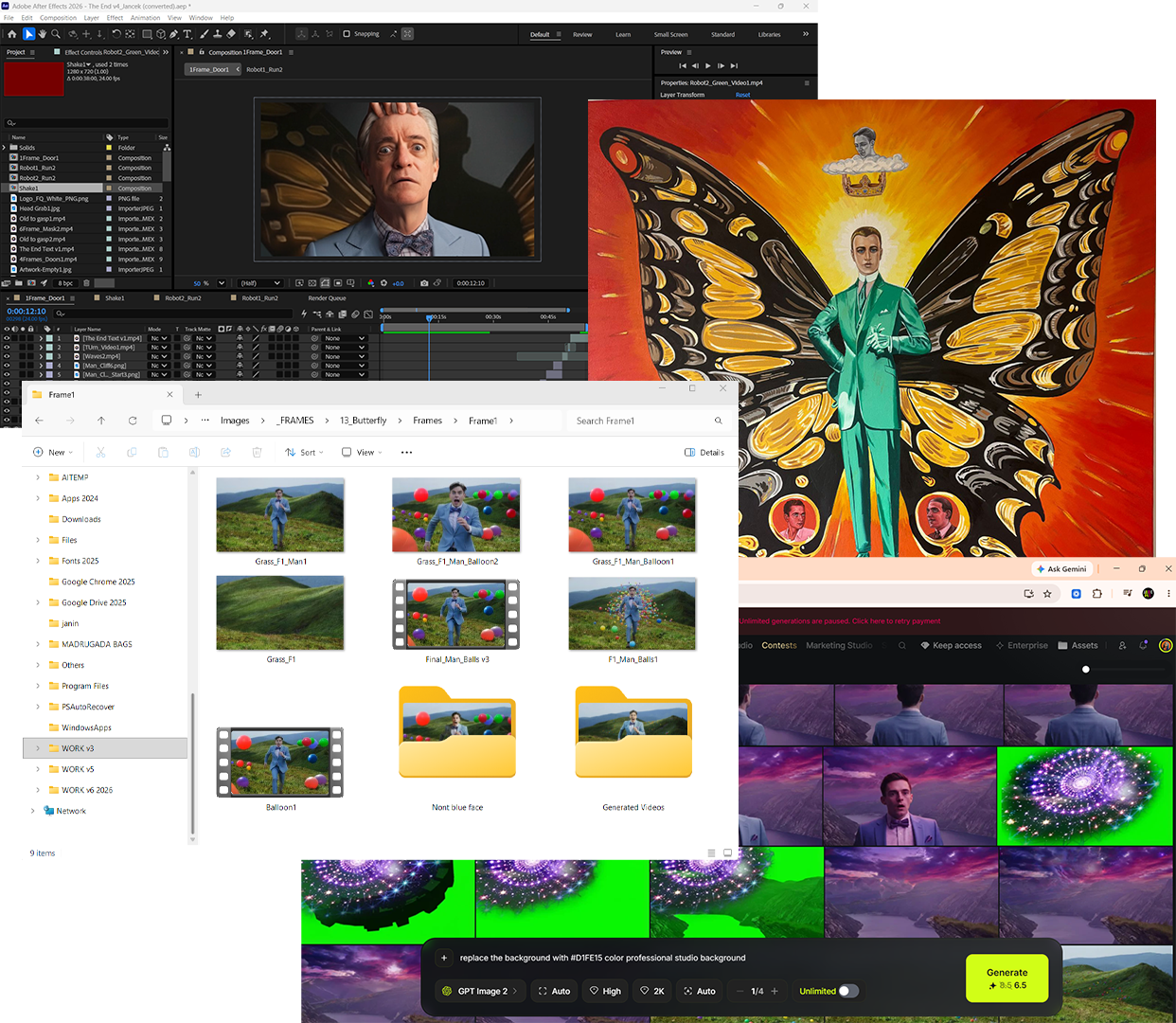
The project went through several detailed feedback rounds directly with the artist, particularly around character accuracy, artwork representation, collage elements, and animation choices.
After final post-production, the completed 1920 × 1080 film teaser was approved and later shown during a live art presentation in Paris. The work received strong feedback and helped Frqncy Studio gain further exposure and referrals.
This project demonstrates my ability to choose and combine multiple AI image and video models based on their strengths, maintain character consistency, translate abstract art into cinematic sequences, and integrate AI-generated material into professional post-production.
This project demonstrates my ability to choose and combine multiple AI image and video models based on their strengths,
The goal was never to generate impressive clips in isolation. It was to use AI as part of a controlled filmmaking process and turn an artist’s visual language into a coherent moving piece.
Be Bold. Be Authentic.